

Destinations
October 12, 2026
·
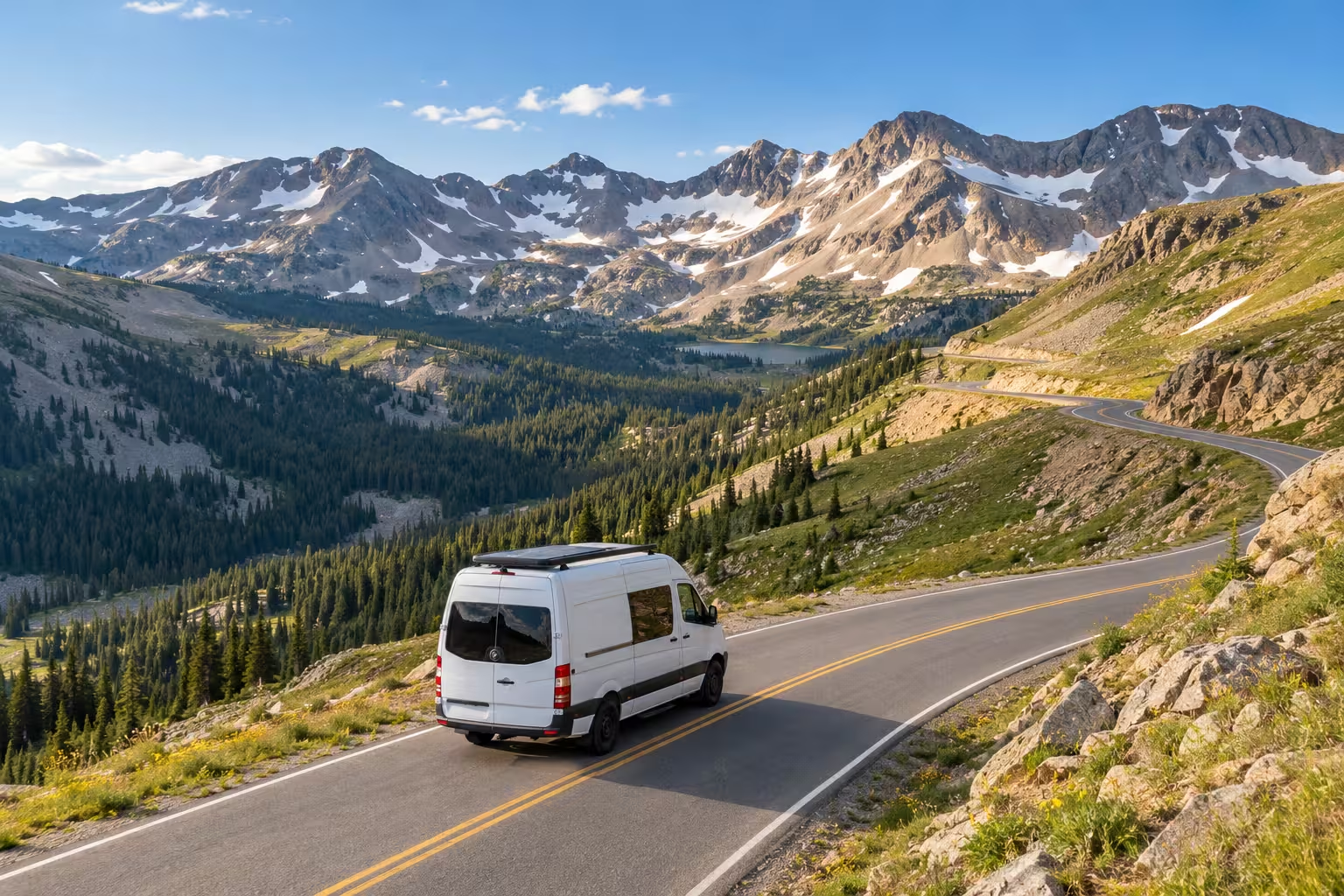
For most couples and small families, the best RV for Colorado national parks is a compact Class B camper van, because several of the state's most scenic park roads ban or discourage longer rigs (Old Fall River Road in Rocky Mountain National Park and Wetherill Mesa Road in Mesa Verde both cap vehicles at 25 feet, and Black Canyon's East Portal Road caps them at 22 feet). A van stops being the right choice when you need beds for more than four people or a full-size bathroom.
If you are renting an RV for the first time, the hard part is not picking a floor plan. It is knowing which roads, campgrounds and parking lots will turn you away once you arrive. Colorado publishes those limits, so you can decide on facts instead of guesswork.
Several of the drives people come to Colorado for have published length caps, and they are shorter than many first-time renters expect. Here are the ones we check against before recommending a vehicle:
The smaller your RV, the fewer of these signs apply. Before you book any vehicle, ask for its exact overall length and compare it to your route.
A campervan handles Colorado's mountain roads the same way any careful driver should: slowly, in a lower gear on descents, and with an eye on the weather. The Colorado Division of Motor Vehicles tells drivers to shift to lower gears to control speed on steep downhill stretches, and our own camper van page notes that many vans can handle mountain routes but that conditions vary by season and vehicle.
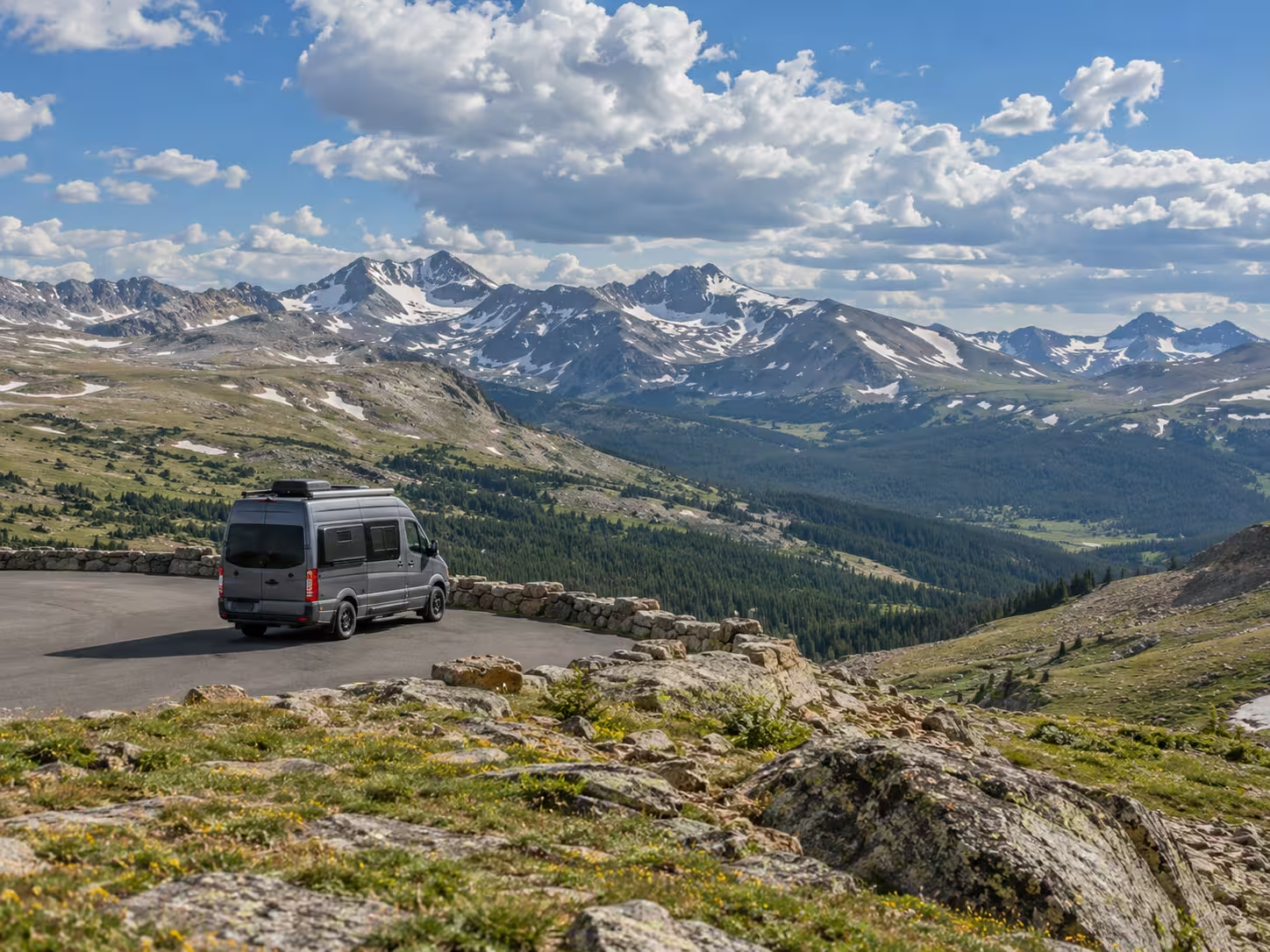
The practical advantage of a van is its size. Tight switchbacks, narrow lanes and pull-offs are easier when the vehicle is short. That matters on the roads above, where the NPS and CDOT warn about sharp curves, missing shoulders and steep drop-offs.
Yes, in most cases. Our Class B type page describes these vans as compact, good for city driving and able to fit in most regular parking spots. That is a real advantage in busy mountain towns and at popular trailheads, where a regular-size space is far easier to find than an oversized one.
With a longer RV, you plan your day around parking. With a van, you can usually park where a car parks. At Mesa Verde, for example, the NPS has visitors leave trailers and towed vehicles in a lot near the entrance; a self-contained van has no trailer to drop.
Our Class B vans sleep two to four people at most, and some include a compact kitchenette. The bathroom is described on our type page as a small shower and bathroom, so expect a compact space rather than a separate full bathroom. It is usable for a few nights, but it is not the same as a residential bathroom.
If someone in your group needs a roomier bathroom, a dedicated bed that never converts, or space to stand and dress at the same time as someone else, be honest about that now. Those needs are the main reasons people move up to a bigger RV.
A camper van is the clear pick. Two people get a bed, a kitchenette in some vans, and access to every road listed above, including the 22-foot East Portal Road and the 25-foot Old Fall River Road. You also get easier parking in mountain towns. This is the trip the Class B was built for.
A van can work, with trade-offs. Our vans sleep up to four, so a family with younger kids who are fine sharing space usually does well. Teens or adults who want their own room will feel the squeeze, especially on rainy evenings inside. Pack light, soft-sided bags so the space stays livable.
A single van will not fit six people. Our vans sleep four at most, and we only rent Class B camper vans, so we will not pretend otherwise. Your realistic options are to rent two vans and travel as a convoy, or to look for a larger RV elsewhere and accept that some roads above will be off-limits. Two vans also mean two bathrooms and the freedom to split up for different hikes. Ask our team about availability for two vans on the same dates.
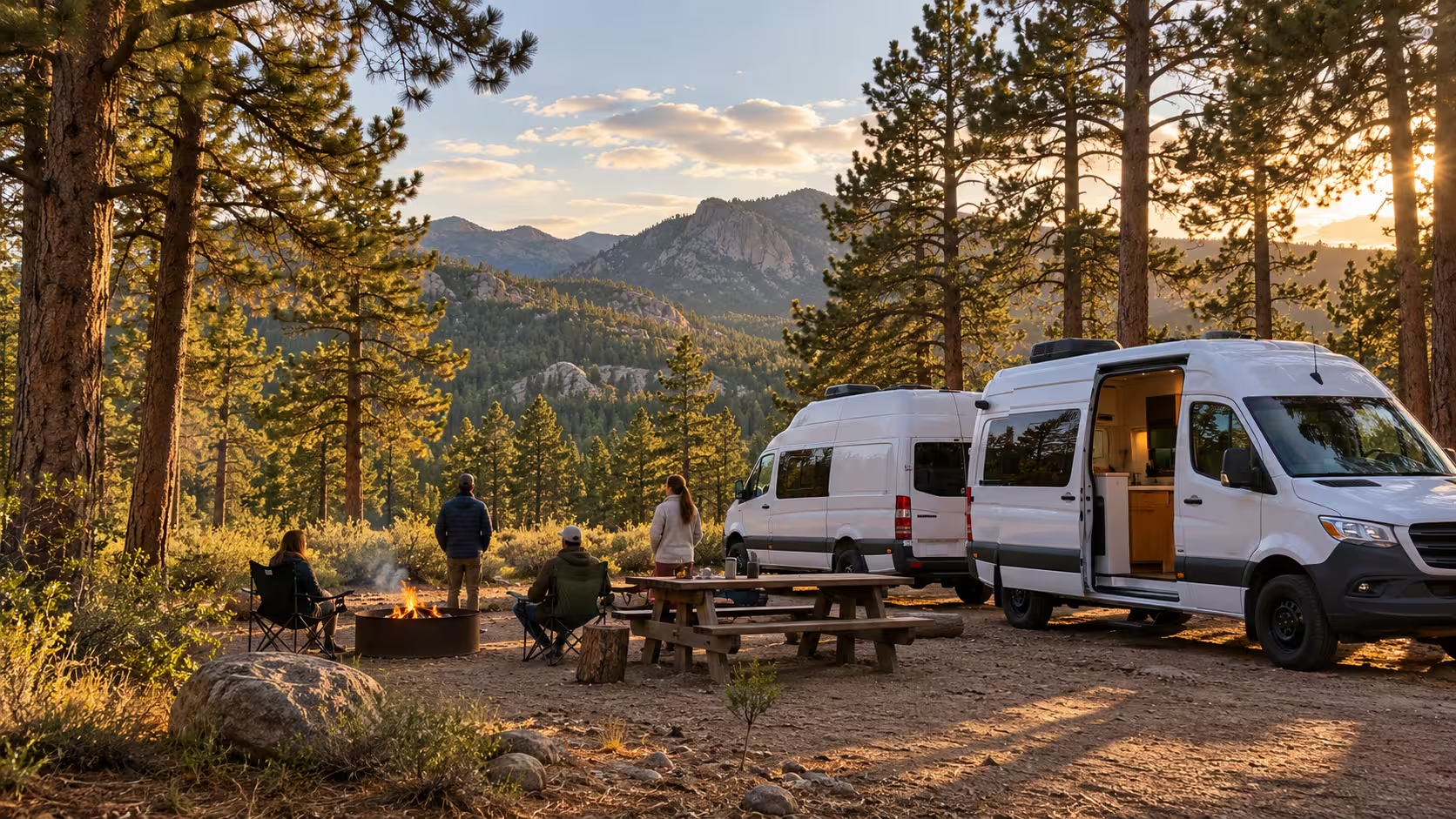
Our fleet is Class B camper vans, so we can speak plainly about them. They fit best for couples, small families and anyone whose itinerary includes narrow park roads, mountain towns or popular trailheads. As our Denver camper rental homepage notes, each rental carries full insurance and round-the-clock roadside help, and vans come stocked with essentials such as dishes and linens, so you are not buying gear for one trip.
They fall short in three places: groups larger than four, travelers who want a spacious bathroom, and people who want a lot of indoor living space for long rainy stretches. If your trip has any of those, talk to us before booking. Mileage limits also vary by listing, so check the listing details if you are planning a long loop through several parks.
You can compare options on our Class B motorhome rentals in Denver page, read the specs summary on our Class B motorhome type page, or browse our broader small RV rentals overview.
For two people, a campervan is not just enough, it is the better choice: it clears every length limit listed here and parks like a car. For a family of four, it works if everyone is comfortable sharing close quarters. For six people, one van is not enough, and two vans are the honest answer if you want to rent from us. The deciding questions are simple: how many beds do you need, how much bathroom do you need, and which specific roads are on your list?
For most couples and small families, a Class B camper van is the best fit, because park roads such as Old Fall River Road in Rocky Mountain National Park and Wetherill Mesa Road in Mesa Verde prohibit vehicles over 25 feet, and East Portal Road in Black Canyon of the Gunnison prohibits vehicles over 22 feet.
A campervan is usually easier on narrow mountain roads because it is shorter and fits in regular parking spots. Whatever you drive, compare its exact length to the published limits on your route. We rent only Class B camper vans, so we do not offer Class C motorhomes.
Yes, if it is under 35 feet. CDOT prohibits commercial and recreational vehicles 35 feet or longer, including combined vehicle and trailer length over 35 feet, and the pass closes for the winter season.
Yes, a van can make the drive when the road is open. CDOT does not recommend vehicles over 30 feet, the summit road is open Memorial Day through Labor Day only, and you need a vehicle entry reservation through Recreation.gov.
Yes, if you want to drive East Portal Road. The NPS prohibits vehicles over 22 feet, trailers included, and warns of 16 percent grades in places. Check your van's exact length with our team before you go.
No. Our Class B vans sleep two to four people at most. A group of six should plan on two vans or a different type of vehicle.
Tell us your group size and the roads on your list, and we will help you check whether a van fits. Contact our Manager and the Denver Camper Rentals Team, or if you already know a van is right, View available RVs. Common questions about rentals are also covered on our FAQ page.